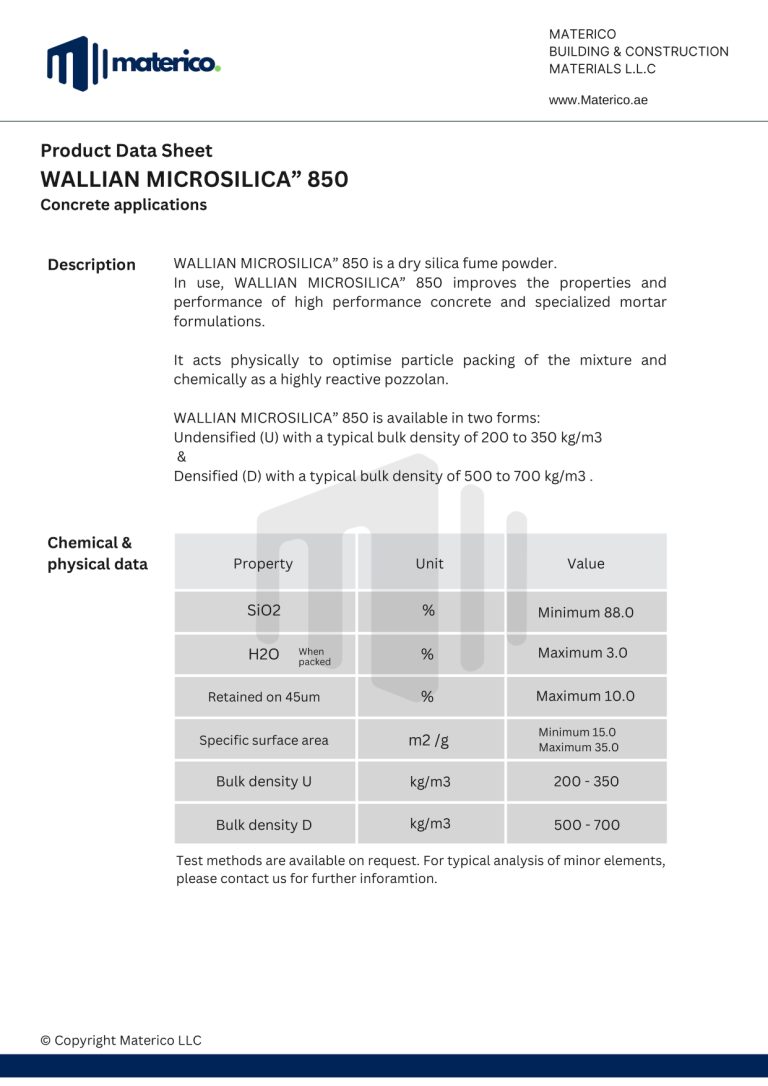
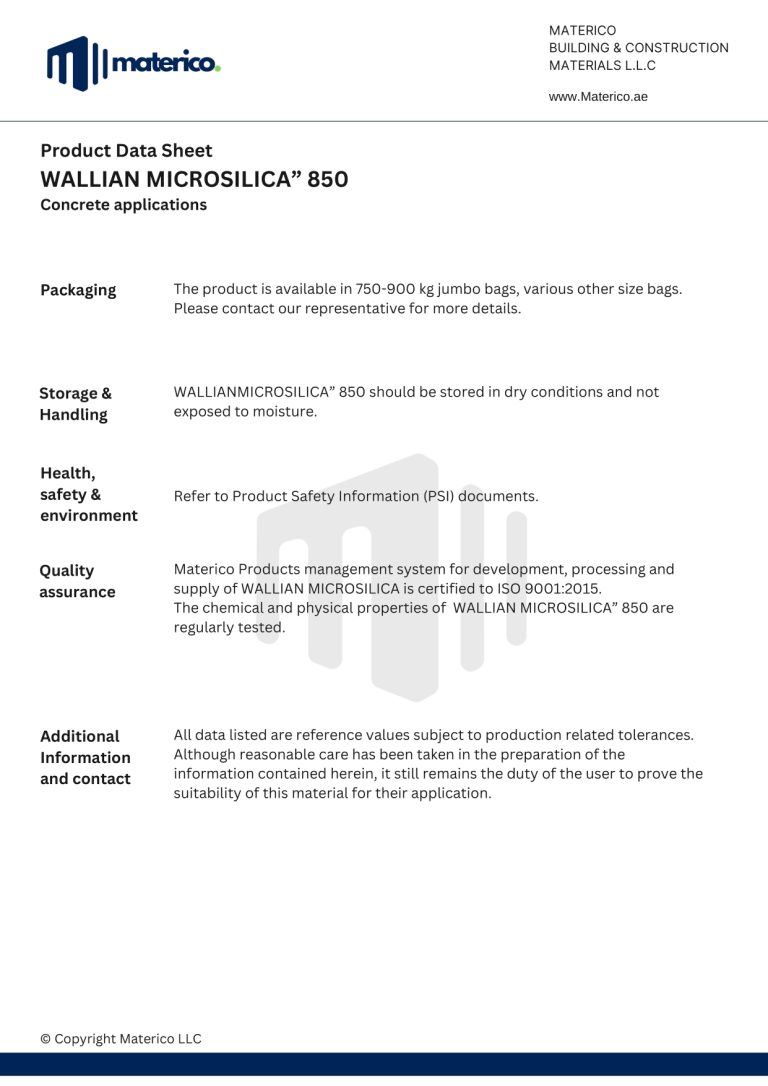
Microsilica, also known as silica fume, is a byproduct of producing silicon metal or ferrosilicon alloys. It is a highly reactive amorphous silica that is used as a supplementary cementitious material in concrete to improve its properties. Microsilica is typically produced in a controlled environment and has a very fine particle size, making it highly effective in filling voids between cement particles and enhancing the strength and durability of concrete. Microsilica is known for its pozzolanic properties, which means it reacts with calcium hydroxide in the presence of water to form additional calcium silicate hydrate (C-S-H) gel. This results in denser concrete with reduced permeability, increased compressive strength, improved durability, and enhanced resistance to chemical attack and abrasion. Microsilica is commonly used in high-performance concrete applications, such as bridges, tunnels, high-rise buildings, and marine structures, where strength, durability, and long-term performance are critical. It is typically added to concrete mixes in small quantities (usually around 5-10% by weight of cement) and requires proper handling and mixing procedures due to its high reactivity and fineness. Overall, microsilica is a valuable additive in concrete production that can help improve the performance and longevity of concrete structures.